
Jamaica’s coral reefs are among the best
studied in the world and maybe the longest directly
observed submarine ecosystems,
with data available since the 1950s.
 Subsequent observations by
researchers at the Discovery Bay Marine
Laboratory of the University of
West Indies, as well as other scientists,
have added to the wealth of
information that is now available about
Jamaica’s marine ecosystems.
Subsequent observations by
researchers at the Discovery Bay Marine
Laboratory of the University of
West Indies, as well as other scientists,
have added to the wealth of
information that is now available about
Jamaica’s marine ecosystems.
Jamaica is located
at the center of coral diversity in the
Atlantic Ocean. Over 60 species
of reef building corals grow here, with
fringing reefs occurring on a
narrow, 1-2 km shelf along most of the north
coast of Jamaica. Reefs
also grow sporadically on the south coast on
a much broader shelf that
is over 20 km wide. In addition, reefs and
corals can be
found on the neighbouring banks of the Pedro
Cays, 70 km to the south,
and the Morant Cays, 50 km to the
southwest.
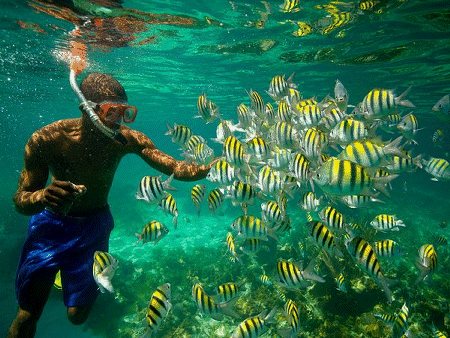 Jamaica's
underwater world is rimmed with coral reefs,
etched with canyons and
grottos, and sheered with vertical walls.
Marine life is a kaleidoscope
of living color. And, it's all close at
hand. From coast to coast, the
dive sites are only a few minutes from
shore. Divers will enjoy balmy
year round weather
and warm clear waters averaging 78 to 85
degrees. Visibility is usually
excellent, averaging 100 feet. Close-at-hand
dive sites and a host of
professional operators contribute to the
island's advantage as a
preferred dive destination. And, with the
establishment of marine
parks, fish populations are growing. Divers
seeking a great dive
vacation couldn't choose a better
destination, especially if traveling
with non divers. The diversity of topography
and natural attractions is
second to none.
Jamaica's
underwater world is rimmed with coral reefs,
etched with canyons and
grottos, and sheered with vertical walls.
Marine life is a kaleidoscope
of living color. And, it's all close at
hand. From coast to coast, the
dive sites are only a few minutes from
shore. Divers will enjoy balmy
year round weather
and warm clear waters averaging 78 to 85
degrees. Visibility is usually
excellent, averaging 100 feet. Close-at-hand
dive sites and a host of
professional operators contribute to the
island's advantage as a
preferred dive destination. And, with the
establishment of marine
parks, fish populations are growing. Divers
seeking a great dive
vacation couldn't choose a better
destination, especially if traveling
with non divers. The diversity of topography
and natural attractions is
second to none.
As distinct as the island's
people and topography are, the underwater
world is usually diverse.
Along the winding North Coast, the
precipitous underwater wall hugs the
shoreline closely. Toward Negril the terrain
flattens, but the diving
peaks.
Negril sets
the
standard for calm, protected warm
waters. Along the solitude of Negril's seven
miles of beach, the waters
are protected from the wind. The sea is
generally shallow near shore.
Out on the reefs the visibility is often
exceptional, from 60-80 feet
to over 100 feet. Underwater terrain has
excellent patches and
spur-and-groove coral reefs which include
caves and overhangs. Unique
types of diving near Negril include huge
"coral cottage" in depths of
60 feet or more.
Brightly colored tropical fish are inhabitants of the reef within Negril's Marine Park. Thick with stands of gorgonians and sponges, the reef is protected by an active mooring program. Large fish populations exist near deeper reefs. Nurse sharks can often be seen beneath coral over-hangs layered with bright red finger sponges.
Several close-to-shore wrecks include two coral encrusted Cessna planes and a 50-foot tugboat referred to as the Pete Wreck. Sitting upright in 90 feet of water, with barracuda hanging about. This wreck is intact and can be penetrated (recommended for advanced divers). A popular dive is Throne Room in 30-70 feet, where you dive through a crack in the reef and see corals, sponges, nurse sharks and cubera snapper. Another is Sands Club, 40-80 feet, where divers have close encounters with colorful and abundant fish. Treasure Reef, in 25-50 feet, has spotted moray eels, fairy basslets and large star coral heads.
Conservation efforts in Negril have paid off. Fish populations flourish. Divers (and snorklers) can see logger head turtles, rays and eels. Dolphins also frequent the waters. Doze of popular reefs to visit are more than any diver can see in one vacation. If you're just beginning scuba or want to become certified, Negril is a good place to start. It's one of the best areas in Jamaica to snorkel, either on the reef (less than 10 minutes by boat) or from shore along the cliffs.
At Montego Bay, the island's first Marine Park delights snorkelers and divers alike. The area is fringed by vibrant walls (many begin in only 35 feet) hosting bright sponges. The wall can be a mere 100 yards from shore. Dive sites include Widowmaker's Cave and Airport Reef, with huge caves penetrating the coral and exiting through a plunging wall. Expect to delight in seeing large schools of creole wrasse. The bay's principal attraction is its profusion of sponges in a rainbow of colors. Several dive sites are within the park.
Near Falmouth, walls start as shallow as 25 feet. Visibility averages 60 to over 100 feet. The top of the reef at sites like Chub Castle is covered with corals, gorgonians and sponges.
In Discovery Bay, the wall also comes close to shore. One of two recompression chambers is here. (The other is in Port Royal). In the same area is the University of the West Indies' Marine Laboratory. the most noted in the Caribbean. Students from throughout the world come to learn more of the underwater world.
At Runaway Bay, the reef is alive with brightly colored schools of tropical fish grouper, snapper and stingrays. Large green morays, barracuda, sharks and turtles also hang out. Coral is sometimes punctured with open-ended tunnels and chimneys lined with white, feathery soft corals and orange anemone colonies that fluoresce in the dark. Ricky's reef, Pocket's Reef, and the Reggae Queen are popular sites starting about 50-60 feet. Others include the Canyon, the Garden of Allah, the Nursery, Shipwreck Reef, Spanish Anchor and the Airplane Wreck. Not far from the airplane, divers will be flushed with excitement to discover the "Potty Dive." This toilet, sunk by Jamaque Dive Centre, is a favorite spot for photos.
Between Runaway Bay and Ocho Rios, the wall comes close to shore and drops from 60 feet to over 3,000 feet as the Cayman Trench nears the shoreline. Explore a shallow shelf of spur-and-groove corals with nurse sharks and caverns, then expect the quick drop-off. A popular dive includes the wreck of the Kathryn in 50 feet of water. This 140-foot-long World War II Canadian minesweeper is home to a profusion of fish that are fed by hand. Colorful yellowtail snapper, parrotfish, sergeant majors and goatfish can be seen at a shallow dive at Dickies' Reef, beginning in 22 feet of water.
Walls encrusted with hard and soft corals welcome divers exploring the relatively pristine waters of Port Antonio. At Alligator Head, in 80-90 feet, advanced divers encounter an array of sponges, corals, tropical and hawksbill turtles. Trident Wall is another popular site. The reef is not far from shore and ideal for snorkeling opportunities. Divers and snorkelers discover shallows around beautiful Kingston Cay, marveling at the natural world of uninhabited mangroves. Southeast of Port Royal is the Texas Wreck, an American naval ship that was sunk in 1944, now situated among an abundance of black coral. The wreck's gun placements are visible . Two steel-hulled wrecks, home to black tip sharks and huge jacks, have recently been discovered.
Excellent dive facilities are found islandwide. Few days are lost to inclement weather. There are quite a few Jamaica all-inclusive resorts and packages available to help you save on your expenses. Many resorts offer dive packages and they are reasonable priced.
Tanks are not available for hire except for use on guided dives. These dives are led by qualified guides. Groups are kept small and personalized; scuba instruction is offered at all levels. You must present a certification card. Remember, safety standards are strictly enforced. Dive depth is limited to a maximum of 100 feet. Cost of a one-tank dive averages about US$38 per day. Two tank is about US$65. Resort courses start at about US$75. Snorkeling equipment ranges from $15-$20 per day. Visitors are not to come into contact with the reef, or take starfish, conch shells, sea fans or coral.
Editor's Note: Professional dive operators maintain quality equipment and provide excellent diving. Most licensed operators are recognized by major dive organizations like PADI. Check with your nearest JTB Office for the current list of licensed dive operators.